
Why Cold Forged Components Are Critical for Steering and Suspension Systems
Material utilization in cold forging, vs. ~50–70% for machining
Of cold forged parts go to the automotive sector
Higher tensile strength: forgings vs. equivalent castings
Why This Matters
Steering and suspension components carry a burden almost no other part does: they are safety-critical, permanently fatigue-loaded, and expected to survive a decade of potholes without a single crack. A failed housing is an inconvenience. A failed tie rod is a crash. That risk profile explains why cold forged automotive components dominate these systems — the process builds strength into the metal's internal structure rather than hoping the material survives being cut. Explore our forging capabilities to see the process in practice.
"Machining cuts through the grain. Forging bends it around the corner. On a part that flexes ten million times, that difference decides everything."
What Is Cold Forging?
How Does the Process Work?
A ductile metal billet — typically low-carbon or alloy steel — is deformed under high pressure at or near room temperature, with no heating cycle. The metal flows plastically into the die and takes near-net shape in seconds.
What Does "Cold" Actually Change?
Because the billet is never heated past recrystallization, its grain structure isn't reset. It's re-aligned to follow the finished geometry, and work hardening raises yield strength as a byproduct of forming.
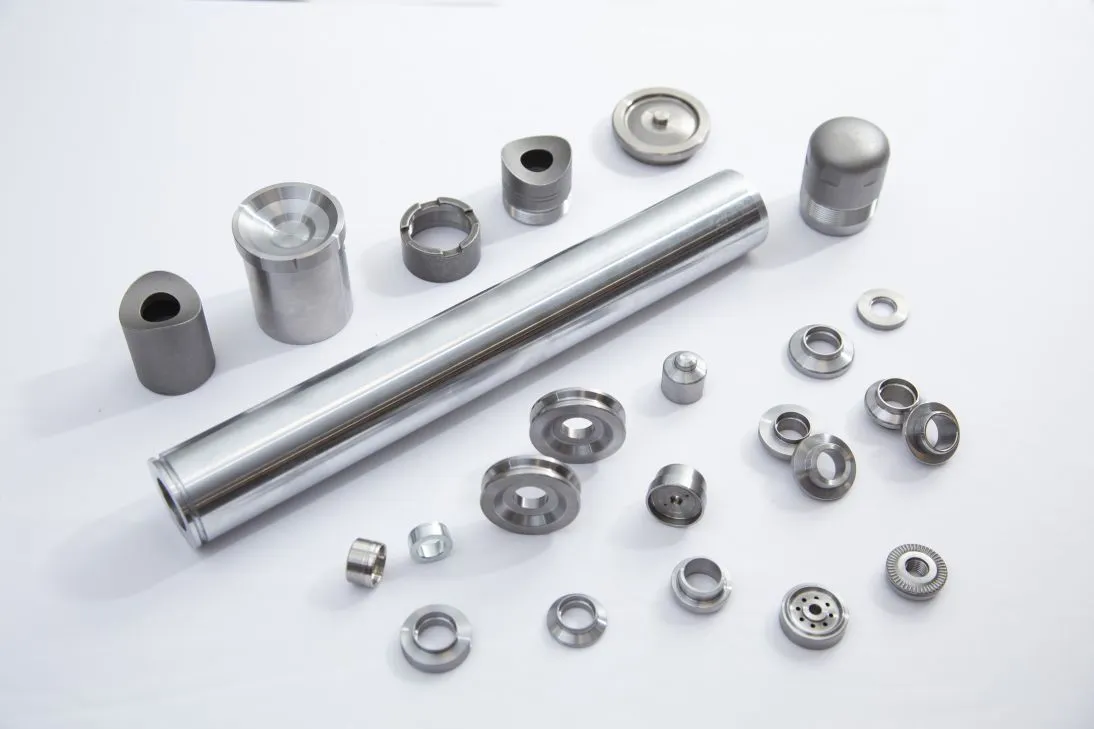
Our suspension components with cold forging part
Why Grain Flow Improves Fatigue Life in Cold Forged Automotive Components
This is the heart of the argument. Machining removes material without regard for grain direction, so it cuts across grain boundaries and leaves exposed grain ends where cracks readily start. Casting produces a coarser, more random structure that can hide porosity and shrinkage voids. Cold forging does neither — continuous grain flow follows the part's contours, so stress travels along the grain rather than across it, resisting crack initiation under cyclic load. Forgings typically deliver 20–30% higher tensile strength than equivalent castings of the same material, with meaningfully better fatigue life. (See Total Materia on cold and hot forging.)
Five Reasons Steering and Suspension Rely on Cold Forging
Each of these properties maps directly to the safety-critical, cyclically-loaded demands of chassis components.
Ball joints, tie rod ends, and control arm components see millions of load reversals; aligned grain flow resists crack propagation.
Unlike castings, forgings carry no voids or shrinkage defects to nucleate a failure in a safety-critical part.
Cold forging holds tight, repeatable tolerances, which is why precision automotive steering parts are formed rather than cut.
Compressive forming produces harder, smoother surfaces that resist wear in articulating joints.
Cold forging reaches 85–95% material utilization against roughly 50–70% for machining — decisive economics at automotive volumes.
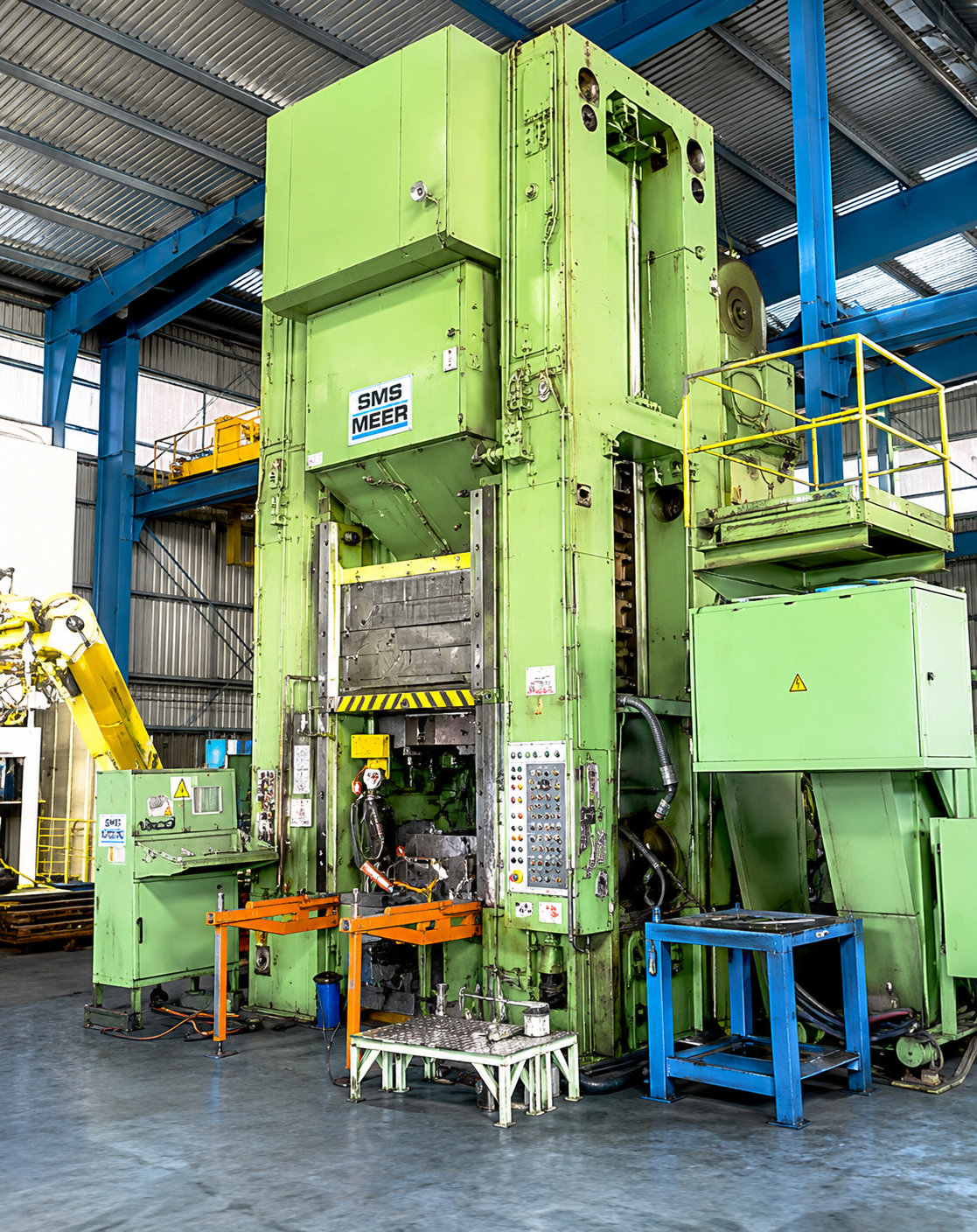
Cold Forging Press — Schuler 630T
"Every fluid-carrying component in a vehicle is quietly doing a critical job. The manufacturing decisions made upstream are the only reason it keeps doing that job through 10 years and 150,000 miles."
Which Steering & Suspension Components Are Cold Forged?
Tie rod ends and inner tie rods, ball joint housings and studs, steering shafts and yokes, pinion blanks, control arm bushings and mounts, stabilizer link components, wheel studs, and strut mount hardware. Any automotive steering components manufacturer or automotive suspension components manufacturer building to OEM chassis specs works from a forged blank on the load-bearing pieces.
Cold Forging vs. Hot Forging vs. Machining
Hot forging offers greater design freedom and handles complex or thick geometries that resist cold flow, but with more dimensional scatter from thermal variation. Machining wins on one-off precision, undercuts, and internal threads. Cold forging wins where the part is small-to-medium, the volume is high, the tolerances are tight, and the loading is cyclic — exactly the chassis profile.
In practice, most finished parts combine both: cold forge the blank, then machine the critical features.
Frequently Asked Questions
Click any question to expand the answer.
Cold forging shapes a metal billet under high pressure at or near room temperature, with no heating cycle. The metal flows into a die and takes near-net shape while its grain structure re-aligns to the finished geometry.
Forging creates continuous grain flow that follows the part's contours, so stress travels along the grain rather than across cut grain ends. Forgings also avoid the porosity and shrinkage voids that castings can contain.
Tie rod ends, ball joint housings and studs, steering shafts and yokes, pinion blanks, stabilizer link components, wheel studs, and control arm mounting hardware.
Cold forging runs at room temperature with tighter tolerances, better surface finish, and high repeatability. Hot forging heats the billet, allowing more complex or thicker geometries and harder-to-form alloys, but with more dimensional variation.
Yes. Material utilization of 85–95% versus roughly 50–70% for machining, combined with fast cycle times, makes tooling investment amortize quickly across high-volume programs.
Usually only for critical features. The forging delivers near-net shape, and targeted CNC machining finishes threads, bores, and sealing or bearing surfaces to final tolerance.
Ready to move critical chassis parts from cast or machined to cold forged? Request an RFQ from Marimba Auto.
Request an RFQ →



