
Aluminum Die Casting Automotive Parts: A Complete Guide for OEMs
Projected aluminum content per vehicle by 2030
Castings remain the largest aluminum product form in vehicles
Of automotive aluminum is recycled at end of life
Why This Guide Matters
Aluminum is the fastest-growing material in the modern vehicle, projected to reach roughly 550 pounds per vehicle by 2030 — a 233% rise over 1990 levels. Castings remain the single largest aluminum product form in that mix, which makes die casting central to almost every OEM lightweighting roadmap. This guide walks through what die casting is, where it fits, and — most importantly for a buyer — how to evaluate a supplier's quality system. Start with our manufacturing capabilities for the wider picture.
"A casting isn't a part until it's passed PPAP. The process makes the shape; the quality system makes it shippable."
What is Aluminum Die Casting?
They are components made by injecting molten aluminum into a steel die under high pressure — housings, brackets, covers, and structural nodes valued for low weight, strength, and complex near-net-shape geometry.
The Core Process
Molten aluminum is injected into a hardened steel die under high pressure, solidifying into a near-net-shape part with tight tolerances and complex geometry in a single cycle. High-pressure die casting (HPDC) is the dominant automotive method.
Why OEMs Choose It
It combines low mass, structural strength, part consolidation, and thermal conductivity — delivering shapes that would be uneconomical to machine from billet. For a deeper look at the performance case, see our companion post on why die castings suit high-performance components.
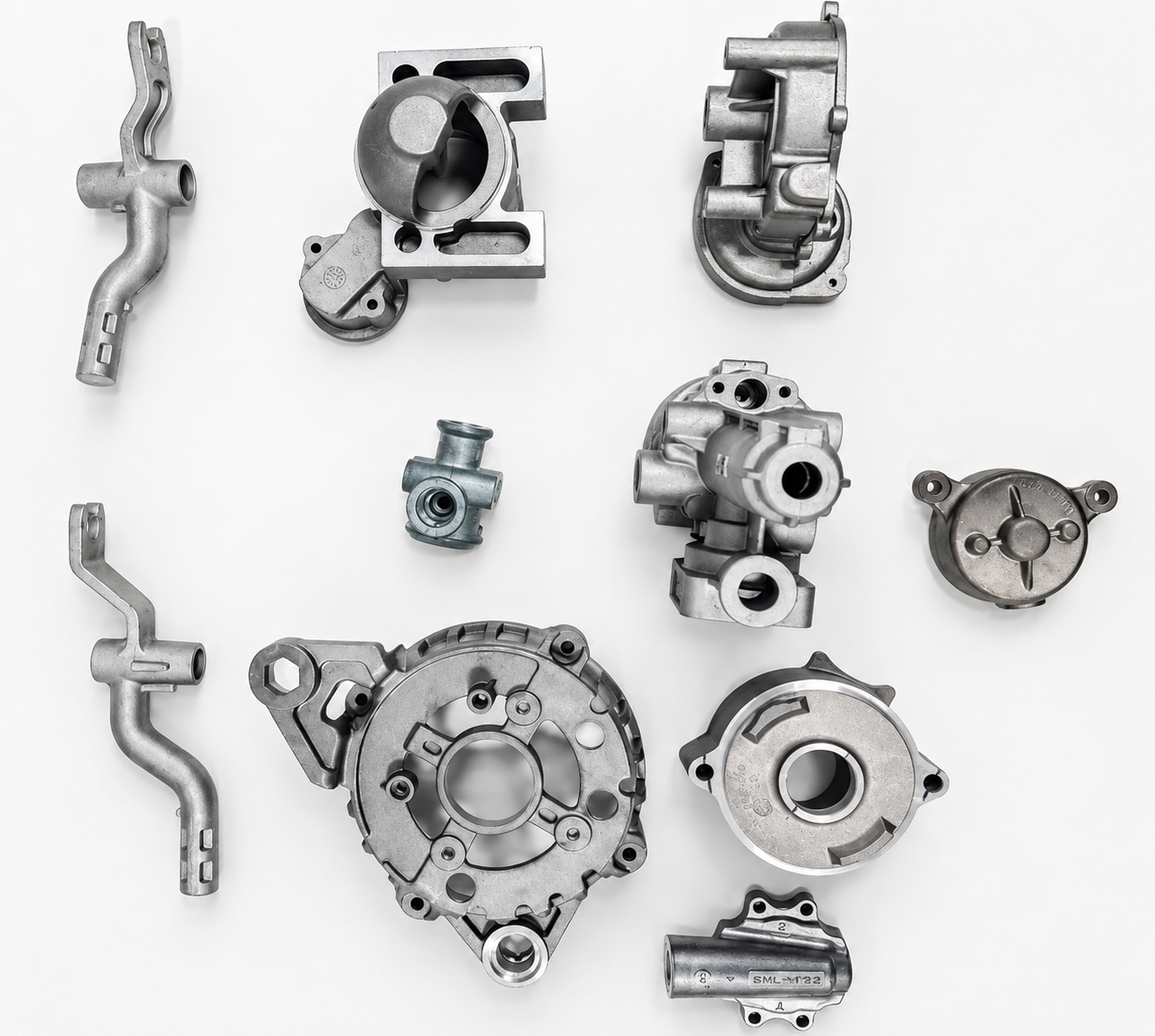
Our aluminum die casting products / all rights reserved
Common Aluminum Die Cast Automotive Parts
Engine and transmission housings, oil pans, cylinder head covers, turbocharger components, brackets and mounts, e-motor and inverter housings, battery-tray structures, and heat-sink assemblies. As powertrains electrify, castings shift from ICE engine parts toward EV housings and structural nodes, but they remain the largest aluminum product form throughout.
Quality Standards Every OEM Buyer Should Verify
This is where sourcing decisions are won or lost. An aluminum die casting manufacturer serving OEMs must operate an IATF 16949 quality management system, the automotive-specific standard built on ISO 9001. Before production, expect a full PPAP (Production Part Approval Process) submission covering the control plan, PFMEA, dimensional results, material certifications, and capability studies so the customer can confirm the process reliably makes conforming parts. A credible automotive die casting supplier also brings porosity control (high-vacuum HPDC for leak-tested or weldable parts), documented leak testing, and traceability.
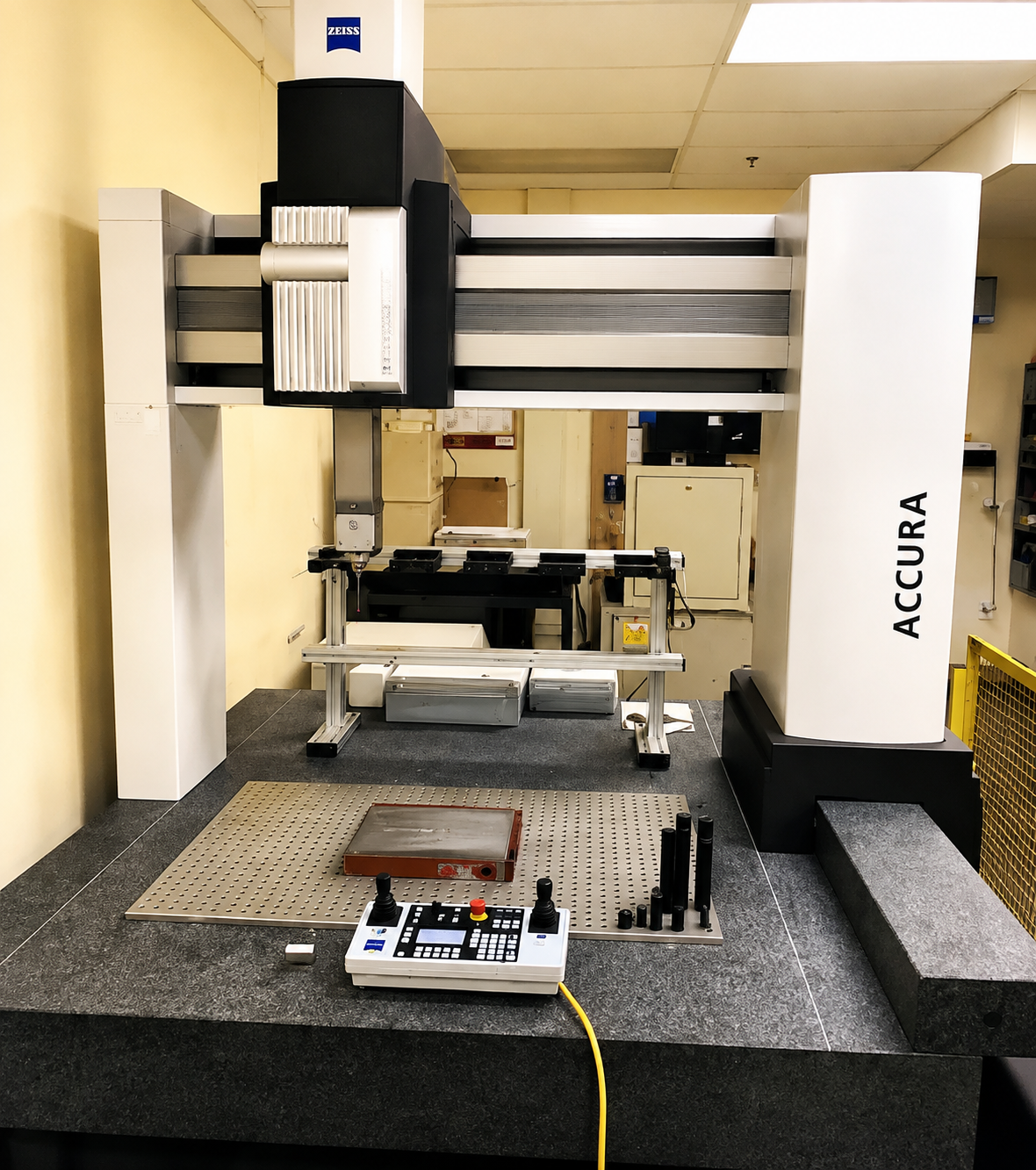
CMM machine at Marimba Auto facility
How to Select a Die Casting Partner
Five checkpoints that separate a production-ready supplier from a generalist quoting on casting work.
Confirm current IATF 16949 registration, not just ISO 9001.
Ask for a sample submission and the standard approval level they run.
High-vacuum capability matters for pressure-tight and structural parts.
In-house machining, finishing, and validation shorten the supply chain and keep accountability in one place.
Volume headroom and lot-level traceability protect launch timing and recall exposure.
What Changes with EVs?
Electrification reshapes the casting mix rather than shrinking it. Powertrain and transmission castings give way to battery housings, e-motor and inverter cases, and mega cast structural nodes. Thermal loads rise, part consolidation intensifies, and recycled-content alloys gain ground — around 90% of automotive aluminum is already recycled at end of life, aligning the material with OEM sustainability targets.
Frequently Asked Questions
Click any question to expand the answer.
They are components made by injecting molten aluminum into a steel die under high pressure — housings, brackets, covers, and structural nodes valued for low weight, strength, and complex near-net-shape geometry.
IATF 16949 is the automotive-specific quality management standard built on ISO 9001. It signals that a supplier runs the process controls, traceability, and continual-improvement systems OEMs require for production parts.
PPAP, the Production Part Approval Process, is the documented submission — control plan, PFMEA, dimensional results, material certs, and capability studies — that proves a process can reliably produce conforming parts before mass production.
Verify current IATF 16949 registration, PPAP discipline, porosity and leak-test control, in-house machining and finishing, and capacity with lot-level traceability.
Yes, when engineered with the right alloy, heat treatment, and high-vacuum casting to control porosity — essential for crash-loaded and pressure-tight applications.
The mix shifts from ICE powertrain castings toward battery housings, e-motor and inverter cases, and large structural castings, while castings remain the largest aluminum product form in vehicles.
Evaluating an aluminum die casting supplier for an OEM program? Request an RFQ from Marimba Auto.
Request an RFQ →



